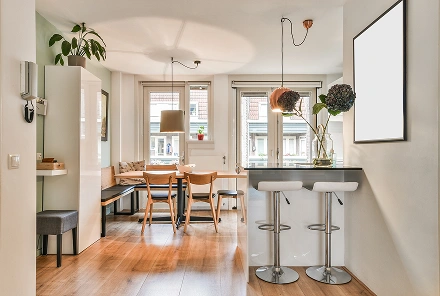
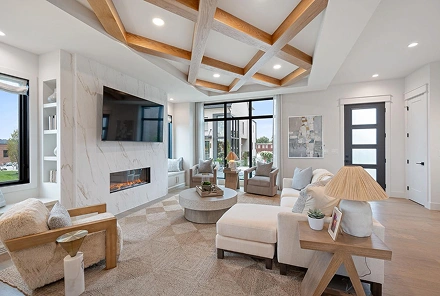
Interior design for families has to do two jobs at once: look good and hold up to everyday life. The most useful trends right now aren’t about a single color or a passing style. They’re about creating spaces that are comfortable, flexible, and easy to live in. Here are the interior design directions worth considering if you’re planning a new home or refreshing the one you have.
Warm, Natural Materials
Many homeowners are moving away from stark, cool palettes toward spaces that feel warmer and more inviting. Natural materials help create that feeling.
- Wood tones: Wood flooring, cabinetry, open shelving, and beams add warmth and texture.
- Stone and stone-look surfaces: Countertops, fireplace surrounds, and accent walls bring a grounded, lasting look.
- Textured fabrics: Linen, wool, and woven materials soften rooms and add depth without relying on bold color.
For families, the practical benefit matters too. Natural textures and mid-tone finishes tend to hide everyday wear better than very dark or very light high-gloss surfaces.
Flexible, Multi-Purpose Spaces
The way families use their homes has changed. A room may serve as an office during the day, a homework spot after school, and a guest room on weekends. Designing for flexibility helps a home keep up.
- Flex rooms that can shift from office to playroom to guest space
- Built-in desks or workstations in kitchens, lofts, or hallways
- Furniture with hidden storage, such as benches, ottomans, and beds with drawers
- Pocket or barn-style doors that let a space open up or close off as needed
Defined Zones Within Open Layouts
Open floor plans remain popular, but many families want more definition within them. Instead of one large undefined space, designers use rugs, lighting, ceiling details, and furniture placement to create distinct areas for cooking, dining, and relaxing. If you’re weighing a fully open plan, our guide to open-concept living covers the benefits and trade-offs.
Durable, Easy-Care Finishes
Families with kids and pets often prioritize finishes that look good and clean easily.
- Performance fabrics on sofas and chairs that resist stains
- Quartz or other low-maintenance countertops in busy kitchens
- Luxury vinyl plank or durable tile in high-traffic areas, mudrooms, and laundry rooms
- Washable paint finishes on walls that see frequent touching
Choosing durable materials up front reduces maintenance and helps the home look fresh longer.
Smart Storage Everywhere
Clutter is one of the biggest challenges in family homes, so storage has become a design feature in its own right.
- Mudrooms or drop zones with cubbies, hooks, and benches near the garage entry
- Walk-in pantries that keep the kitchen counters clear
- Built-in cabinetry around fireplaces and in family rooms
- Organized closets with adjustable shelving
Planning storage during design is far easier than adding it after move-in.
Layered Lighting
Good lighting changes how a room feels. Rather than relying on a single overhead fixture, many homes now use layers of light:
- Ambient lighting for overall illumination
- Task lighting over islands, desks, and work areas
- Accent lighting to highlight artwork, shelving, or architectural details
Dimmers add flexibility, letting the same room work for homework, dinner, and movie night.
Personal, Lived-In Style
Perhaps the biggest shift is away from homes that look like a showroom and toward spaces that reflect the people who live there. Family photos, collected pieces, books, and artwork make a home feel personal. A neutral, well-built foundation makes it easy to change accents over time as tastes and needs evolve.
Bringing Trends Into Your New Home
The best trends are the ones that make daily life easier and more enjoyable. When you plan a new home, you have the chance to build in storage, flexible spaces, and durable finishes from the start rather than retrofitting them later. Explore Ashford’s custom floor plans or reach out to our team to talk about designing a home that fits your family’s style and routine.